MaxSCADA collects data from every device in your solar plant, stores it in its own historian and shows the plant live in any browser. It tells you exactly how the plant is performing: PR, availability, expected vs actual power and the energy you are losing.


A plant can look "green" on a basic monitoring portal while a string is down, an inverter runs hot or soiling eats several percent of the yield. Vendor portals show one brand at a time, keep the data in their own cloud, and can't tell you what the plant should be producing.
MaxSCADA reads every brand directly over Modbus, keeps all data on your own server, and compares every inverter with what the measured sun says it should produce, so every lost kWh shows up with its cause.
Built by engineers who commission and operate solar plants, for the people who are on call when something trips.
Modbus TCP and RTU, OPC UA and MQTT. 189 ready profiles for inverters, meters, weather stations, trackers and relays, with auto-discovery and automatic tag creation.
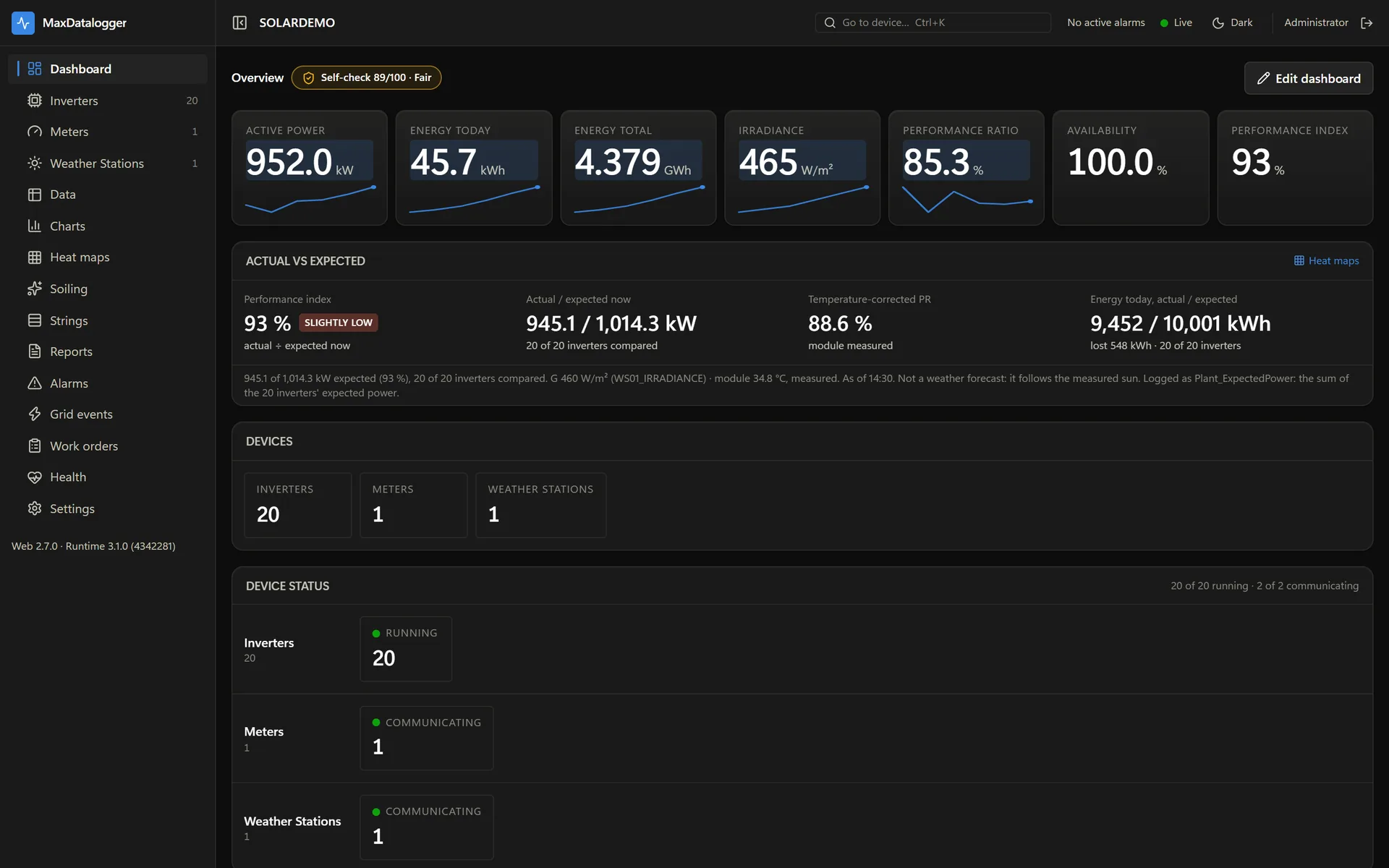
Plant power, energy, irradiance, PR, availability and the status of every device, refreshed every second over a live connection.
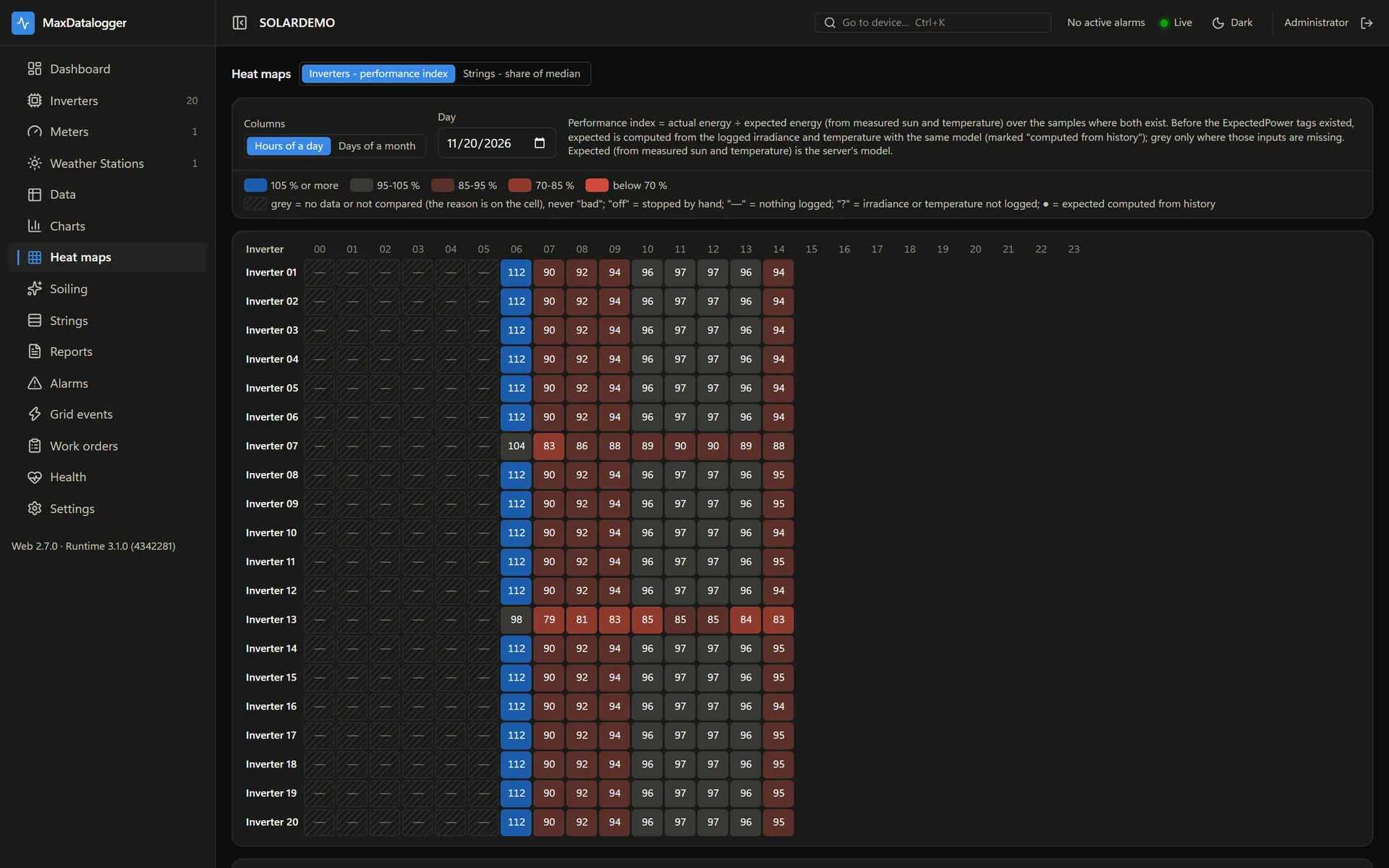
Expected power from the measured sun and module temperature, the performance index of every inverter, heat maps, string faults and soiling loss.
Daily and monthly yield, PR, availability and curtailment losses per device type. Export to PDF, Excel or CSV.
Priorities, shelving, chattering detection and escalation, with e-mail notification, inverter fault codes in plain words, and work orders for the field team.
Logging timers from 1 second, stored in MySQL on your own server, with store-and-forward through outages and full data export.
Grid events, power-quality logging and direct integration with the MaxEnergic Power Plant Controller for active and reactive power setpoints.
Meteocontrol VCOM XML export with FTP, a REST API, a Modbus slave and an OPC UA server for the utility, the owner's portal or a third-party SCADA.
Role-based users, HTTPS, an audit log and a daily self-check score: clock, data gaps, communications and energy balance.
MaxSCADA runs on a Windows or Linux server in the plant, as a service with a desktop console. Engineers and operators use it from any browser on the plant network, or remotely over VPN.
The plant at a glance. Active power, energy, irradiance, PR, availability and performance index, plus actual vs expected power and the energy lost today, all computed live from the measured sun.
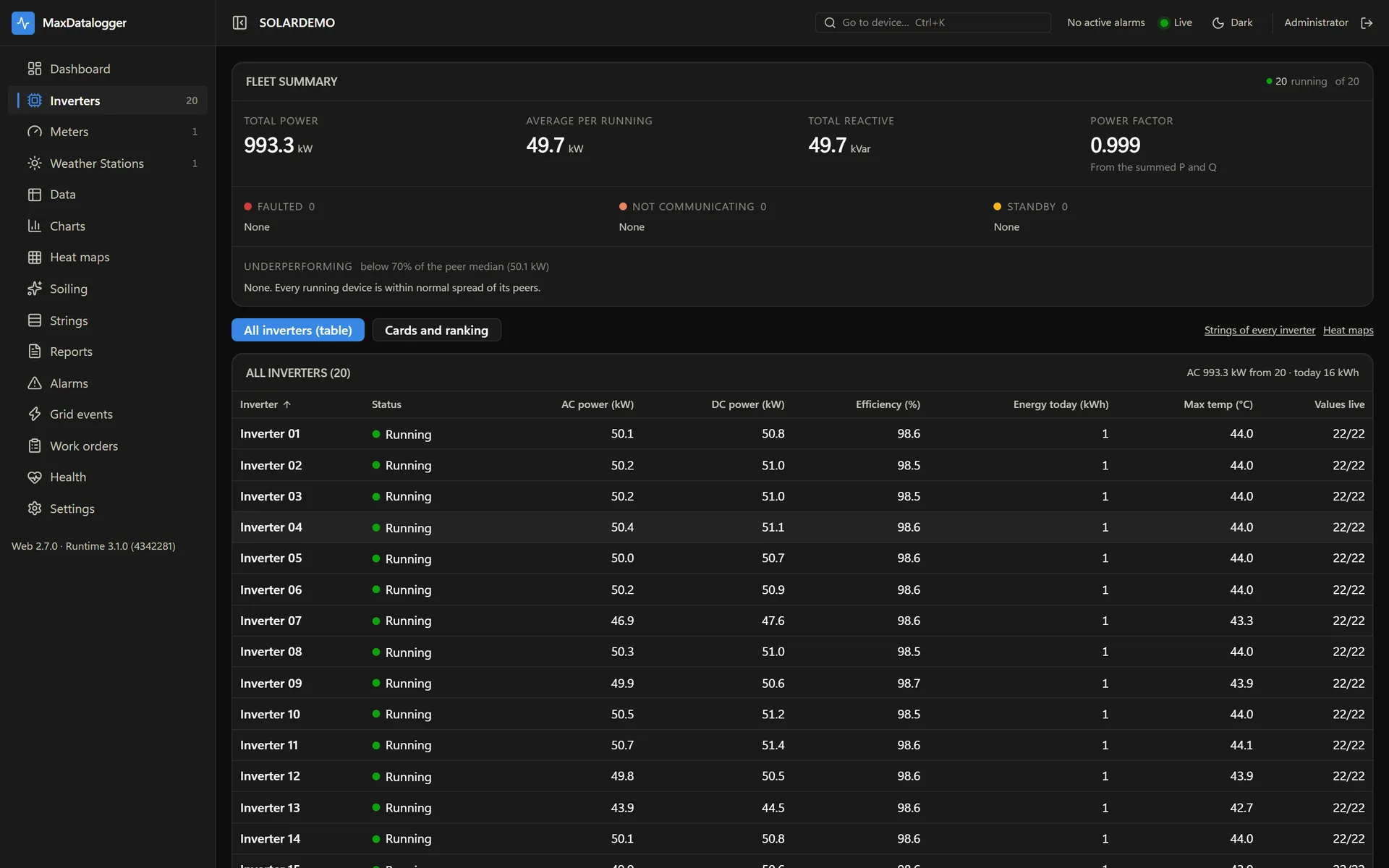
The whole fleet in one table. Every inverter's status, AC and DC power, efficiency, energy and temperature, with underperformers flagged against their peers automatically.
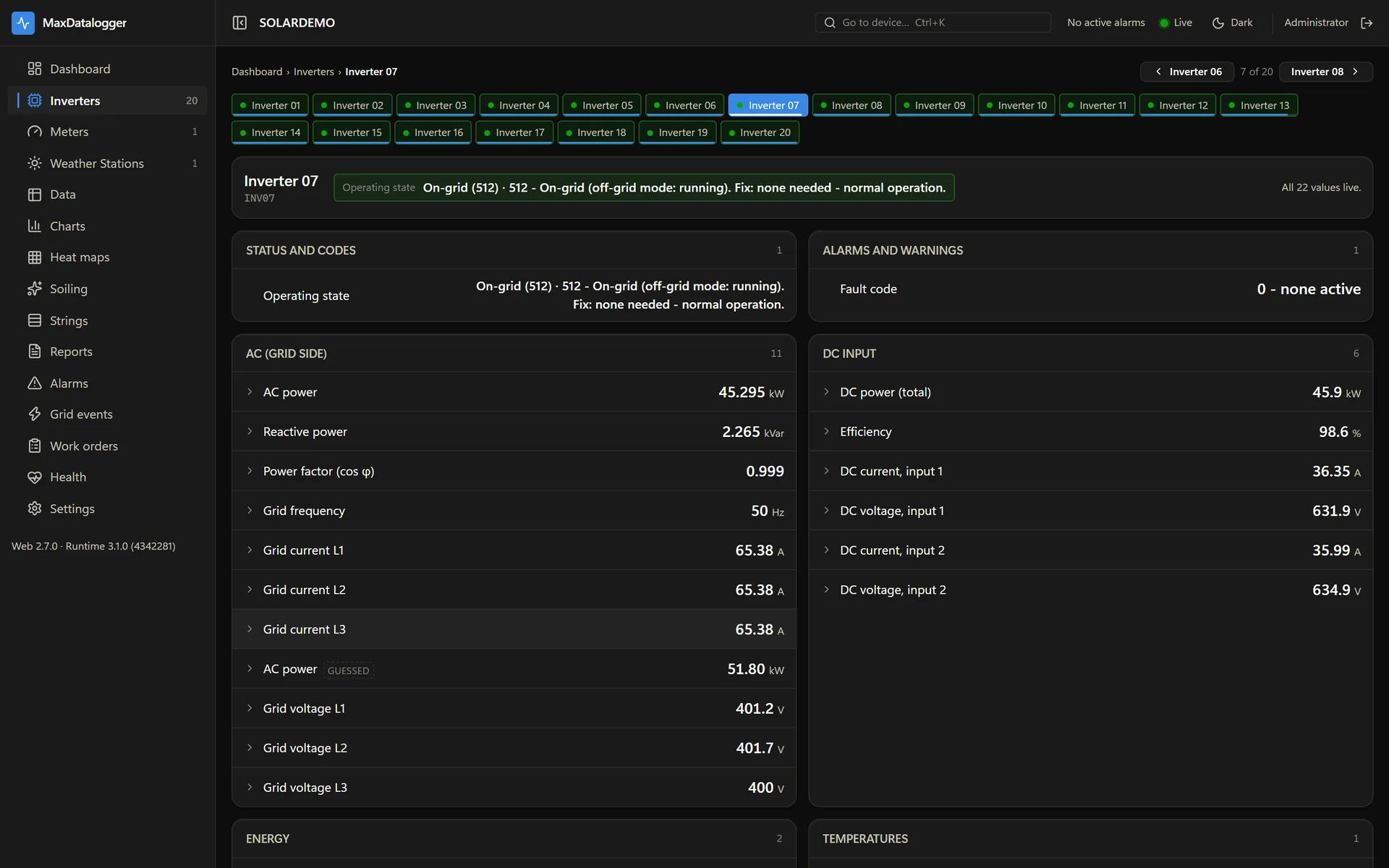
Everything about one device. Operating state and fault codes explained in plain words, AC and DC measurements, energy and temperatures, one click from the fleet table.
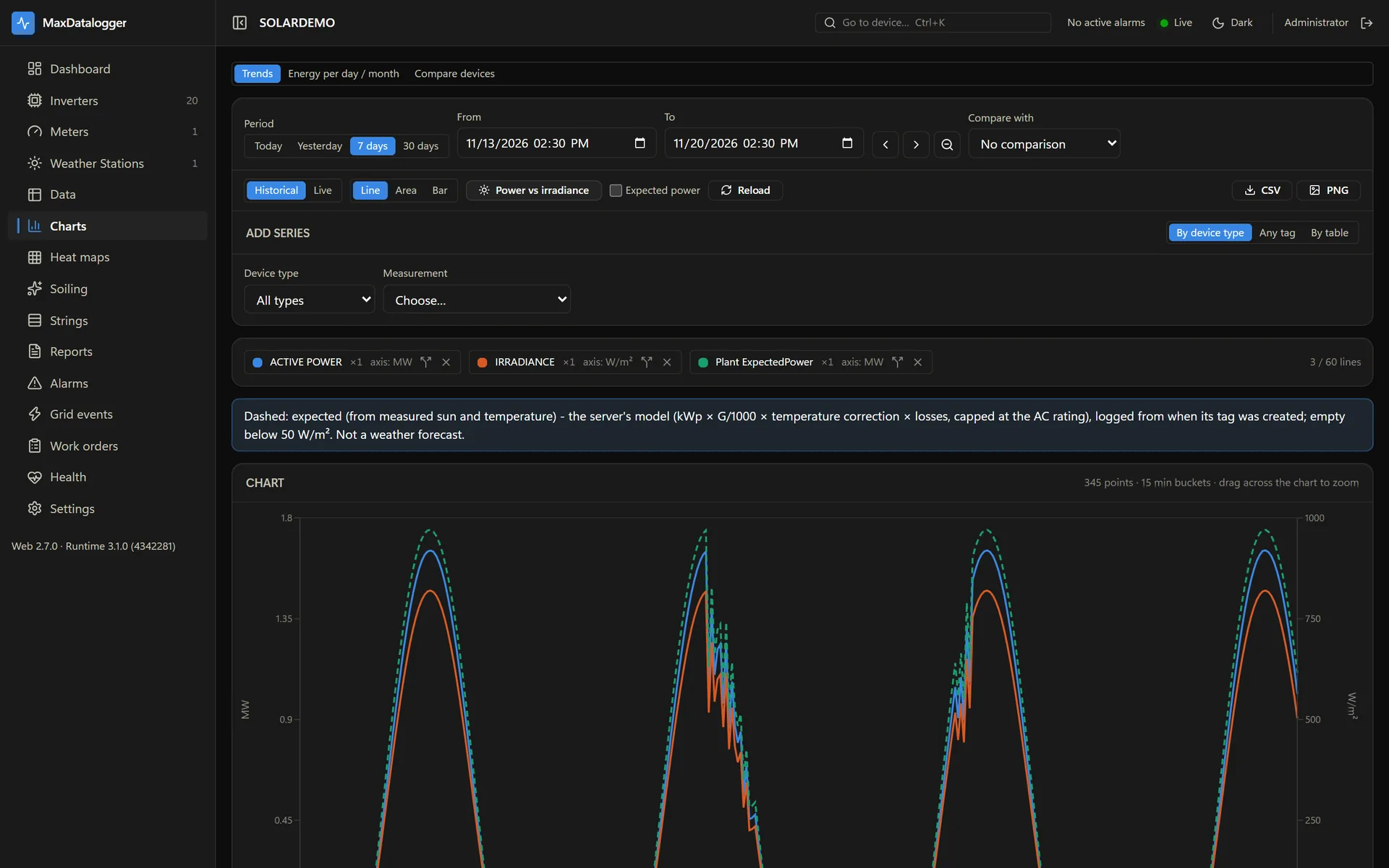
Any trend, any period. Power against irradiance and expected power over hours, days or months. Compare devices, zoom in, and export to CSV or PNG.
Find the weak inverter in seconds. Performance index per inverter per hour. Colours show what the measured sun says was lost, so a dirty or faulty unit stands out at once.
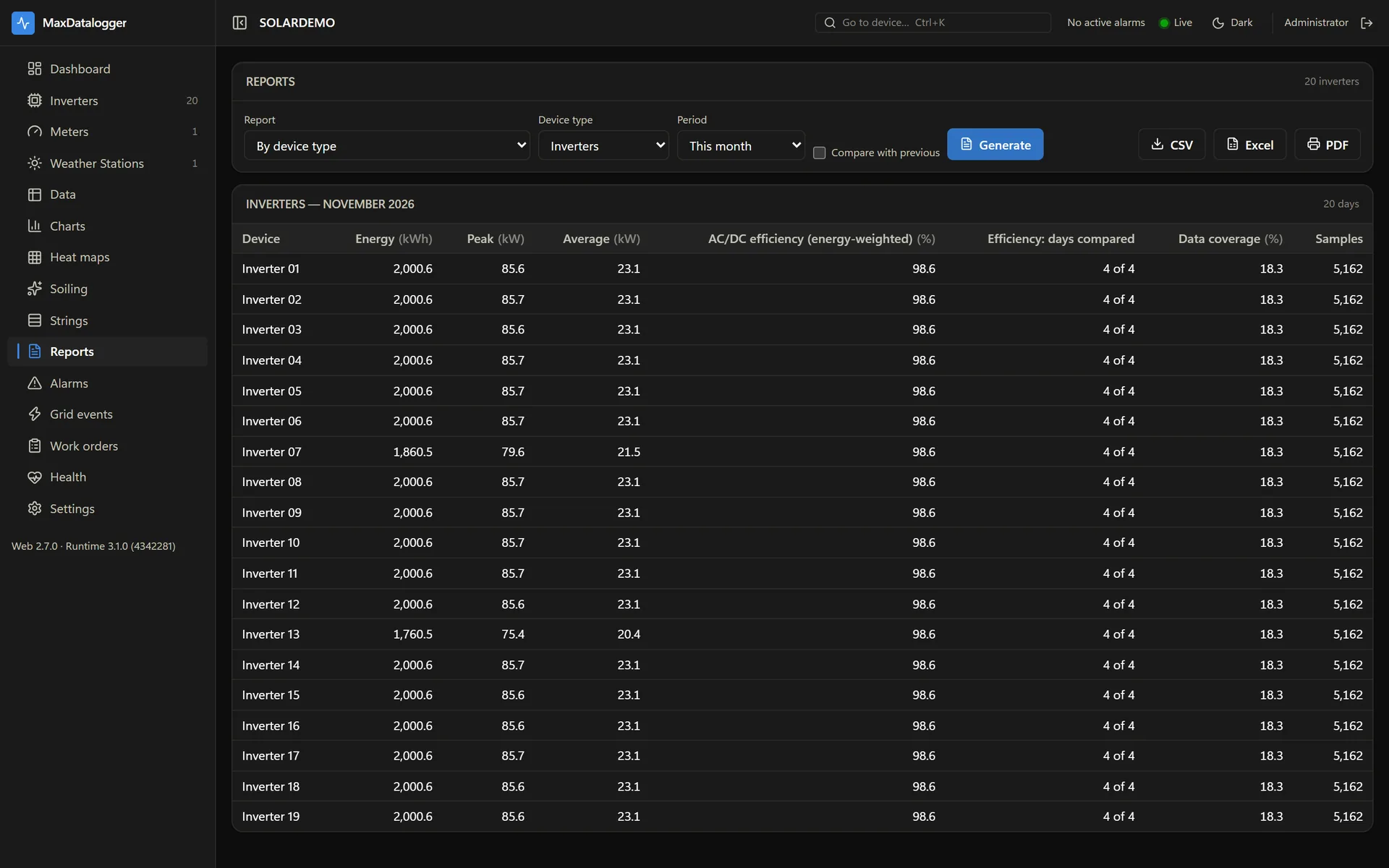
Reports for owners and lenders. Monthly and daily energy, peak and average power, efficiency and data coverage per device type, in PDF, Excel or CSV.
MaxSCADA and our Power Plant Controller run on solar plants for leading developers and independent power producers.
SCADA for the solar portfolio supplying the Aqaba Special Economic Zone Authority and GID.
Monitoring and data logging across the multi-site solar portfolio.
SCADA for the solar wheeling plant serving Karak Municipality.
MaxSCADA together with the MaxEnergic Power Plant Controller.
Pick each device's profile: tags, scaling and alarms are created automatically. Modbus TCP/RTU, OPC UA or MQTT.
Values are logged from every second into your own historian, buffered through any outage.
Expected power, PR, availability, heat maps and reports show where energy is lost and why.
Alarms and e-mail reach the on-call engineer, work orders track the fix, and the PPC holds the grid limits.
Tell us about your plant: its size, inverter brands, and whether you also need a power plant controller. Our engineers will get back to you with a proposal.